


Governments everywhere are letting children down instead of lifting them up as conflict, hunger, poverty and climate change hold back child development, UN rights chief Volker Trk told Member States in Geneva on Thursday.
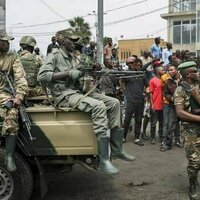
Sudan is now the worlds largest and most devastating humanitarian crisis, the head of the UN Childrens Fund (UNICEF) warned on Thursday. After two years of war, over 30 million people more than half of them children are living in the grip of mass atrocities, famine and deadly disease.
More than 100 children under the age of five die every day in East Asia and the Pacific due to air pollution, the UN Childrens Fund (UNICEF) warned in a new analysis released on Thursday, calling for urgent action to tackle the crisis.
During a discussion on early childhood development, the High Commissioner for Human Rights underscored that 80 per cent of the human brain is formed in the first three years of life, as he appealed for a reset in youth-centred policy.
Investments in early childhood are one of the smartest ways to achieve sustainable economic development; studies indicate that the economic return can be up to 13 times the amount invested, he insisted.
Citing South Africa's Child Support Grant and the Bolsa Familia programme in Brazil, the High Commissioner pointed out that they help to ensure that children born into the toughest circumstances can still have the most essential needs covered.
Todays threats to children are also virtual, and youngsters everywhere lack the tools to stay safe online, Mr. Trk continued, before warning that childrensaccess to food, basic sanitation and drinking water remains unequal across the world; two in five lack access even to basic sanitation.
Children suffering extreme heat to rise eight-fold
Climate change is also likely to make children and future generations more vulnerable, Mr. Trk told the Council, noting thatin the next 30 years, eight times as many children could be exposed to extreme heat waves and twice as many to extreme wildfires.
Emphasising the wider benefit to society of early childhood development, Dr. Najat Maalla Mjid, Special Representative of the UN Secretary-General on violence against children, said that thateven the very youngest and those in the most vulnerable situations have rights, including rights to development, protection and participation, as outlined in the UN Convention on the Rights of the Child.
UN Human Rights Council/Marie BambiVolker Trk, UN High Commissioner for Human Rights. (file)Brain drain
More than one million new neural connections form every second in the first few years of life, the practicing paediatrician explained, as she warned of the long-term impacts on very young childrens health, learning and behaviour when caregivers are unable to provide nurturing and safe care.
Many children with disabilities or from minorities have no access to supportive early child development services, along with others in poor or emergency settings, Dr. Mjid noted.
Given the unprecedented humanitarian crisis - due to conflict and forced displacement - we must ensure that [early child development] programmes are embedded in the humanitarian response, she insisted.
One chance at parenting
Also taking part in the debate at theHuman Rights Councilwas 13-year-old child rights advocate, Vlad.
Raising a child is not a maths test that you can retake it if you haven't done it right the first time, said the young Moldovan, noting that parents, family and the community form the pillars of a childs first year of life.
But what happens when a child is born with a disability or into a family that doesn't have enough resource to rise them? Do we step aside because this is not our problem or - on the contrary - do we help the child and the family to develop and overcome those difficulties? he asked.
Vlad, who volunteers at a free centre for children with disabilities and developmental difficulties run by NGO Lumos Foundation, stressedhow important it is to intervene early in child development, becausethe earlier we react, the more chances we give to the child to develop harmoniously a child's difficulties, however great they may be, can be overcome or, at least, minimized.
I miss my home, my family and friends
Ten-year-old Joyce, who was forced to flee Syrias civil war, told the Council precisely what children needed in her home country, so that other youngsters just like her could stay there in safety: Education, safety and child friendly spaces not shootings, missiles, bombs or kidnappings, she said.
Speaking via videolink, Joyce addressed world leaders directly, asking them to understand that for children to live happily and safely, you need to stop the wars.
She added:We need to go to school, to play, to have food and water and most importantly, not to live in fear.
Admitting that one cant really argue with Joyces statements, Mr. Philip Jaff, Member of the Committee on the Rights of the Child said, that it wasnt needed to be verbose, when what is being said, is essential.
The Convention on the Rights of the Child calls on all countries to ensure to the maximum extent possible the survival and development of the child.
Speaking on behalf of the Committee on the Rights of the Child which assesses the progress that countries make in adhering to the Convention, Philip Jaff insisted that for children to thrive in their early years, governments should implement comprehensive and rights-based, coordinated strategies and across departments and at central and local levels.
In addition, there must be special consideration and social support given to the early childhood needs of children with disabilities and their families, Mr. Jaff said.
UN Human Rights Council/Marie BambiVolker Trk, UN High Commissioner for Human Rights. (file)