


More than one in two people in war-torn Sudan have too little to eat, famine is taking hold and sexual violence is rife, the UNs top aid official said on Monday, as the global body launched anappeal for $6 billionto avert a humanitarian catastrophe in the devastated country and beyond.
Sudans ruinous civil war is approaching its third year, leaving a legacy of malnutrition, massive population displacement and chronic insecurity. As the UN system prepares to launch a call for record funding of $4.2 billion to support aid operations in the country, here are some of the main things to know about what has beendescribedas the largest and most devasting displacement, humanitarian and protection crisis in the world today.
The UN Secretary-General on Friday called on the international community to urgently scale up funding and diplomatic action to ease the suffering of millions of Sudanese facing hunger and displacement as rival militaries continue battling each other for control.
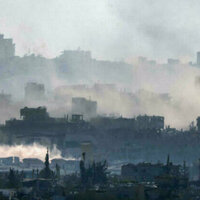
Civilians [are] paying the highest price, shelling, airstrikes [are] continuing unabated, killing and injuring civilians, damaging and destroying critical infrastructure, including hospitals, saidEmergency Relief CoordinatorTom Fletcher.
An epidemic of sexual violence rages,he warned, adding thatchildren are being killed and injured,amid reports of intensifying fighting in South Kordofan in recent weeks- another state in which famine conditions have recently been confirmed.
Speaking in Geneva, Mr. Fletcher explained that theUN 2025 humanitarian and refugee response plans for Sudan aim to assist nearly 26 million people inside the country and across the regionwho facea desperate situation.
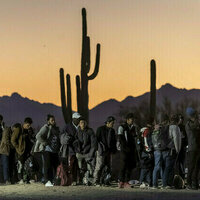
After nearly two years of conflict,a staggering 12 million peoplein Sudan and across borders have been displaced.
The UN aid chief said that he welcomed a conversation just days ago with General Abdel Fattah al-Burhan leader of the Sudanese Armed Forces about the importance of keeping Adre crossing open [from Chad]. But this is a fraction of what is needed and each movement only happens after complex engagement and bureaucratic processes, he stressed.
Famine conditions
According to the UN World Food Programme (WFP), famine has been confirmed in more than 10 locations in Sudan; another 17 are on the brink of famine.
The situation is a collective failure that shames the global community,WFP Executive DirectorCindy McCain told the Geneva meeting via video link.
This is a full-scale hunger crisis and Im going to call it a catastrophe, Ms. McCain continued.The civil war has killed thousands, uprooted millions and set the country ablaze, and yet its forgotten,despite being the epicentre of the worlds largest and most severe hunger crisis ever.
Highlighting the fact that Sudan is also the worlds biggest displacement emergency,UN refugee agency chief (UNHCR), Filippo Grandi, condemned the continuing military logic of the rival armiesthat have waged war against each other since April 2023.
The logic is, lets achieve victory, lets make advances, lets progress militarily, he said, referring to the Sudanese Armed Forces - led by General Abdel Fattah al-Burhan - and the paramilitary Rapid Support Forces, under Mohamed Hamdan Dagalo.
Suffering and neglect
The logic continues to neglect the situation of ordinary Sudanese that are killed, displaced and suffer all sorts of hardship.
Echoing Mr. Fletchers observation that it might be difficult to understand why the UN and its partners were issuing such a large appeal for funding at a time of deep cuts to overseas aid by UN Member States, the UN refugee agency chief explained that needs were immense, with one in three Sudanese uprooted by the violence.
Social systems, health systems, education - kids havent gone to school, almost 13 million people are displaced, he said.
The country is being destroyed; at its foundations, everything is collapsing, Mr. Grandi insisted, in an appeal to the international community to step up and help, not just to ensure that emergency aid and life-saving protection can continue without disruption, but also to end the violence and restore peace to Sudan.
Age-old conflict dangers
Across Sudan, women and girls continue to suffer through appalling patterns of conflict-related sexual violence, and young men have been forcibly recruited to fight, Mr. Fletcher noted. The collapse of the education system has compounded the risks faced by Sudanese girls: child marriage, gender-based violence.
Although access remains heavily constrained, particularly where the fighting is most acute, the UN relief chief insisted that the appeal offered a lifeline to millions once the fighting stops, as he appealed for better access by land, sea and air to those who need help.
WFP chief Ms. McCain explained that millions of civilians had lost their livelihoods while humanitarians struggled to reach those in need because of access restrictions.
Agricultural production has also been decimated,driving up prices by 500 per centin some areas, resulting in millions of displaced who have no access basic food staples.
Nearly 16 million reached in 2024
With $1.8 billion in support last year, humanitarian organizations reached more than 15.6 million people across Sudan. Assistance included food and livelihoods support for more than 13 million people as well as water, sanitation and hygiene support, health and nutrition, and shelter assistance.
Humanitarian organizations working in neighbouring countries provided lifesaving assistance delivering food to over a million people, medical support to half a million and protection services to over 800,000.
For its part, WFP reached more than eight million people with lifesaving aid in 2024 but continues to face widespread access constraints caused by the fighting.
Famine conditions have been reported in at least five locations in Sudan including displacement camps in Darfur and in the western Nuba Mountains, according to a joint press release from the UN aid coordination office,OCHA, and UNHCR.
Catastrophic hunger is expected to worsen by May when the lean season begins. With continued fighting and basic services having collapsed across most of the country, the crisis is set to get worse, it noted.
Rape as weapon of war
Shaza Ahmed, Executive Director of Nada El Azhar - who is a gender based violence (GBV) coordinator in Sudan said thatwomen and girls paid a hefty price, asGBV is used as a weapon of war, compounding a lack ofaccess to health services, education and employment.
In 2024, more than 50,000of the most vulnerable women and girls received dignity kids and over 225,000 people received GBV-services such as mental health or psychological support.
Among the biggest challenges now are protection of female staff and access to communities as well as the overall funding crisis.