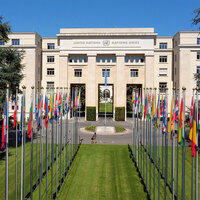



The widening war in the Middle East and its growing impact on civilians came under scrutiny at the UN in Geneva on Monday, as independent experts briefing theHuman Rights Councilwarned of escalating violence following the onset of Israeli and US strikes on Iran and counterstrikes by Tehran and allied groups.
The crisis in the Middle East has entered its third week, with fighting continuing across the region and humanitarian needs rising. Oil prices continue to hover above $100 a barrel, while shipping disruptions and temporary flight suspensions are affecting travel and supply chains. Despite mounting challenges, UN agencies are scaling up emergency aid, warning that displacement, food insecurity and pressure on health systems are growing as the war's impact spreads. Stay with us for live updates from across the UN system. App users can follow coveragehere.
TheUN Secretary-Generalon Saturdaycalled on theinternational community to intensify support for the Government and people of Lebanon, warning that the south of the country risks being turned into a wasteland.
The fighting which has included Iranian drone and missile attacks on Gulf States and Israeli attacks on Hezbollah targets in Lebanon after the group launched assaults is intensifying a regional spiral of conflict the council also heard.
On 28 February, the US and Israel launched a devastating aerial campaign against Iran, ostensibly targeting military sites and nuclear facilities.In almost three weeks, these strikes have resulted in mounting reports of civilian casualties, including children, said Sara Hossein, chair of theIndependent International Fact-Finding Missionon Iran.
Iranian peoples plight
Presenting the missions latest report, Ms. Hossein highlighted the situation of ordinary Iranianscaught between a large-scale military campaign by two countries, the US and Israel, and ongoing repression by their own Governmentin Iran.
Residential areas, several oil depots and a desalination plant have been struck or destroyed, causing severe harm to civilians, she said.
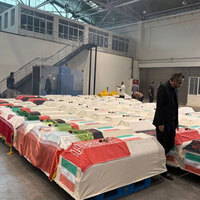
The rights expert also cited an airstrike that destroyed a school in Minab in southern Iran on the first day of the war, killing more than 168 people the vast majority of them girl students, many as young as seven years old.
She also voiced concern about public statements from US officials suggesting that long-established rules of engagement do not apply in this conflict.
Presenting the missions latest report to the Council, Ms. Hossein pointed to the ongoing plight of ordinary Iranian people,caught between a large-scale military campaign by two countries, the US and Israel, and ongoing repression by their own government in Iran.
Residential areas, multiple oil depots and a desalination plant have been struck, damaged and destroyed, causing severe harm to civilians, insisted the independent rights expert, who like all those appointed by the Council is not a UN staff member nor paid for her work.
US statements raise concern
The rights expert also noted how airstrikes had destroyed a school in Minab in southern Iran on the first day of the war,killing more than 168 people, the vast majority of them being girl students, many as young as seven years old, she said, whileexpressing concern at public statements from US officials suggesting that long-established rules of engagement do not applyin this conflict.
In addition to the Minab school strike, 1,000 civilians had been reportedly killed withhospitals and World Heritage sites destroyed,maintained theCouncils Special Rapporteur on Iran, Mai Sato.
Strikes on oil infrastructure have caused toxic environmental consequencesin a country that was already experiencing acute water shortages, she continued.
Echoing widespread concerns about the deteriorating humanitarian crisis inside Iran since the outbreak of war, the Special Rapporteur noted thatthree million people are now displaced inside Iran, while the reported absence of functional air raid sirens and bomb shelters in many urban areas added to concerns about basic civilian protection during hostilities.
Iran says over 1,300 killed
Responding to the independent experts reports to the Council, the Iranian Ambassador to the UN in Geneva, Ali Bahreini, said that more than 1,300 people had been killed and more than 7,000 people injured, including a six-month-old baby. The international community must not remain silent, he insisted.
The war is now well into its third week, having spread to nearly a dozen nations across the already fragile Middle East region.
Bahrain condemns Iranian strikes
Speaking on behalf of the Gulf Cooperation Council and Jordan, Ambassador Abdullah Abdulatif Abdullah of Bahrain condemned strikes by Iran against our countries, which have targeted civilians and critical infrastructure and civilian objects, endangering the lives of residents and the safety and security of the region.
The ambassador also reiterated that the Gulf council hadwelcomed the adoption ofSecurity CouncilResolution 2817 Condemning Irans attacks against its neighbours on 11 March, supported by 136 UN Member States.
Our countries reject the content of the reports of Special Rapporteur and the Fact Finding Mission, characterizing these attacks as retaliatory or reprisal attacks, he said, insisting thattheres no legal justification for such assaults and there is no way to legitimize those illegal actsunder international law.
Also addressing the Council, thePhilippinesechoed serious concerns by regional grouping ASEAN about the Middle East escalation.
This spiral of armed conflict has already claimed many innocent lives, including those of children. This cannot and should not be normalized, Member States heard.