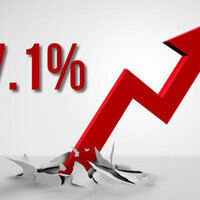


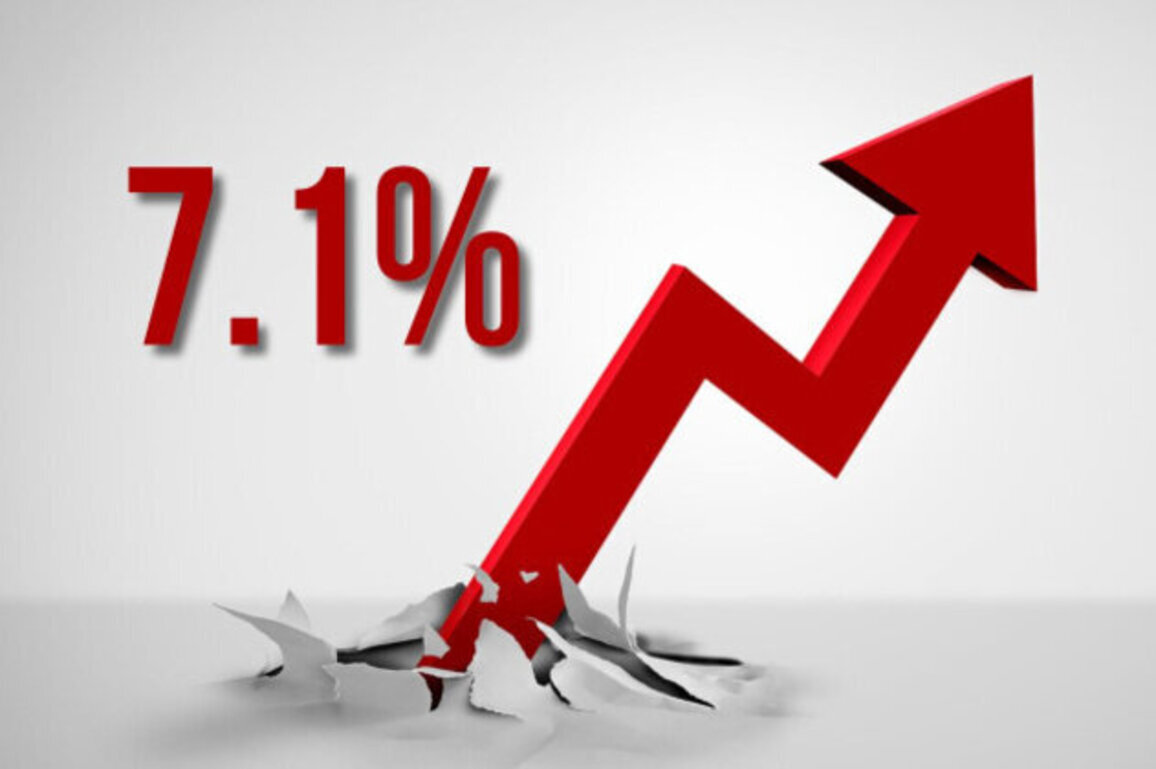
Bulgaria's inflation accelerated sharply in April, with the National Statistical Institute (NSI) estimating monthly inflation at 2% and annual inflation reaching 7.1% under the consumer price index (CPI), according to its express preliminary assessment published on the institution's website.
This marks a significant rise compared to March, when the NSI initially projected monthly inflation at 0.7% and annual inflation at 3.9%. The final figures later published in mid-April showed March inflation slightly higher, with monthly inflation at 0.9% and annual inflation at 4.1%.
The April increase was driven mainly by higher prices in several major consumer groups. The sharpest jump is expected in ?Transport?, where prices rose by 10.6%. This is followed by ?Clothing and footwear? with an increase of 7.9%, ?Food products and non-alcoholic beverages? with 2.1%, and ?Alcoholic beverages and tobacco products? with 0.8%.
At the same time, one of the few sectors showing lower prices is ?Entertainment, sports and culture?, where a decline of 1.5% is expected for the month.
The NSI also published preliminary data for the so-called 'small basket,? which reflects the spending patterns of the lowest-income 20% of households. According to the estimate, food prices in this basket increased by 2.4% compared to the previous month, non-food goods rose by 1.8%, while services registered a smaller increase of 0.1%.
According to the express preliminary assessment for this indicator in April 2026, the monthly increase is expected to be 1.7%, while annual inflation stands at 4.7%.
The NSI introduced flash inflation data for the first time on February 3 this year. The purpose is to provide early information on inflation trends before the release of final and more detailed statistics. This system also allows Bulgaria to be directly compared with the other 20 eurozone countries on inflation indicators after joining the monetary union on January 1, 2026.
The institution notes that the difference between flash inflation and final inflation figures remains minimal. For example, flash inflation for February showed monthly inflation of 0.3% and annual inflation of 3.3%, while the final figures later confirmed monthly inflation of 0.4% and the same annual rate of 3.3%.
For January, flash inflation was reported at 0.7% monthly and 3.6% annually, while the final data were slightly lower at 0.6% monthly and 3.5% annually.
The latest April estimate suggests that inflationary pressure is again strengthening, particularly in transport, food, and household essentials, which directly affect everyday spending. For lower-income households especially, rising food prices continue to remain one of the most sensitive factors in monthly expenses.