


The deadly Ebola outbreak in Democratic Republic of the Congo (DRC) and Uganda does not represent a global pandemic emergency, although the risk is high at a regional and national level, the UN health agency chief said on Wednesday.
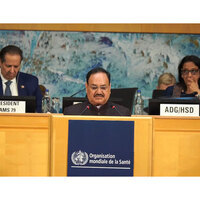
In an update on the fast-developing situation in eastern DRC, World Health Organization (WHO) Director-General Tedros Adhanom Ghebreyesus said that beyond the several dozen confirmed cases of infection, there arealmost 600 suspected cases ofEbolaBundibugyo virusand 139 suspected deaths.
We expect those numbers to keep increasing, given the amount of time the virus was circulating before the outbreak was detected, the WHO Director-General told journalists in Geneva.
Uganda reported two confirmed cases of Ebola in Ugandas capital, Kampala, he added.
In the absence of any vaccine or therapeutics for the virus - which Tedros stressed is extremely rare and was last detected in 2007 - WHO teams are already working with community leaders the epicentre province, Ituri, to help prevent wider transmission.
Decades of violence in mineral-rich eastern DR Congo have contributed to chronic vulnerability among the population, including healthcare workers caught up in ongoing insecurity.
According to the UN refugee agency,UNHCR, there aremore than two million people internally displacedin the affected provinces of Ituri and North Kivu, where the provincial capital of Goma remains under the control of rebel militia M23.
We always have a team in Goma and we always continue to provide us support to the population. And this is what we will continue doing this, during this outbreakwe never left Goma during all the insecurity happening, so we will continue staying to provide the security to the community we serve, stressed WHOsDr Marie Roseline Belizaire, Regional Emergency Director (ad interim and Incident Manager.
Danger zone
Underscoring theinherently challenging task of detecting outbreaks of Ebola in Ituri province where April saw a new spike in civilian deaths, WHOs Regional Director for Africa Dr Mohamed Yakub Janabi, explained that effective disease surveillance depends on reliable community reporting, local health facilities being open and laboratory confirmation of infection. In remote or insecure areas, it can take time for cases to be recognized, he said, pointing out that EbolaBundibugyo virus was only identified after samples were transported some 1,700 kilometres (1,056 miles) across the country to the capital, Kinshasa.
As soon as WHO was aware of the [threat], support was provided to DR Congo to investigate as quickly as possible. And this ended up with the confirmation late last week, stressed Dr Anais Legand, WHO Technical Officer for Viral Haemorrhagic Fevers. Investigations are ongoing to ascertain when and where exactly this outbreak started. Given the scale, we are thinking that it started probably a couple of months ago, but investigations are ongoing and our priority is really to cut the transmission chain.
Wednesdays briefing followed ameeting of the WHO Emergency Committee on Tuesday in Geneva which confirmed that the Ebola outbreak is a public health emergency of international concern but not a pandemic emergency.
Stay with us for updates...